
Visiting Mexico City: A Solo Traveler’s Guide to Ancient Ruins, Aztec History & Tenochtitlán (part 1)
If you want one city where you can eat world-class tacos for lunch, wander through a 700-year-old cathedral at sunset, and stand in the shadow of an ancient pyramid before dinner—go to Mexico City.
For a solo traveler, Mexico City is one of the most rewarding and manageable places in the Americas to explore on your own. But before we “dig in,” let’s clear up a common point of confusion: Aztec vs. Maya.
The Maya were the “old guard,” flourishing between 250–900 AD in southern Mexico and the Yucatán Peninsula—think jungle cities and coastal temples. The Aztecs (properly called the Mexica) peaked much later, from the 1300s to the 1500s, centered right here in the high valley of central Mexico. If you want the ultimate Aztec experience, you come to Mexico City.
Templo Mayor: The Literal Center of the Aztec Universe
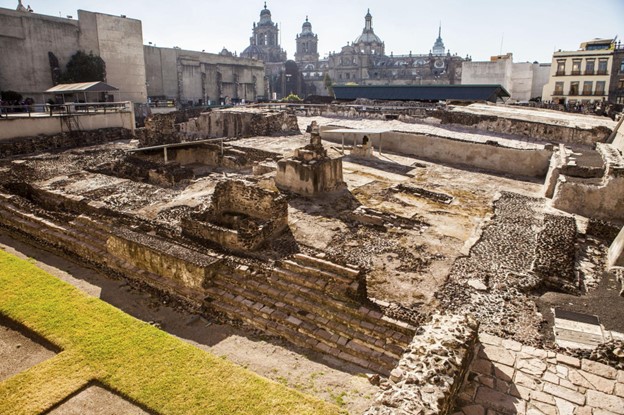
Right in the heart of the Zócalo (the main square), you’ll find the ruins of Templo Mayor. This was the beating heart of Tenochtitlán—the Mexica capital. When the Spanish arrived, they built their cathedral practically on top of it, creating a skyline where you can see three eras—pre-Columbian, colonial, and modern—colliding in one view.
What It Feels Like
You’ll walk along elevated paths to peer into excavation sites that reveal multiple construction phases. The site captures the fundamental Mexica duality of their worldview, as the temple was dedicated to two specific deities:
• Huitzilopochtli: God of war and the sun.
• Tlaloc: God of rain and fertility.
Inside the Museo del Templo Mayor
Inside the Museo del Templo Mayor
To truly understand the history of Tenochtitlán, you must step inside the museum. It is a beautifully organized space built around the archaeological discoveries of the late 1970s.
Highlights You Shouldn’t Miss:
1. The Coyolxauhqui Stone: This 10-foot carved disk depicts the dismembered moon goddess, Coyolxauhqui. Discovered by accident in 1978, it sparked the modern excavation of the entire site. Her story—being defeated, dismembered, and cast down a mountain by her brother Huitzilopochtli—explained the sun’s daily triumph over the moon and why the Aztecs viewed sacrifice as necessary to sustain the universe.
2. Ritual Offerings: Room after room displays jade masks, obsidian blades, and jaguar bones. These items prove how vast the Aztec trade networks were, reaching far beyond the Valley of Mexico.
3. The Tzompantli (Skull Rack): You will see displays of human skull racks. The museum handles this with thoughtful context, focusing on religious symbolism rather than sensationalism.
4. Everyday Life: Beyond the spectacle, you’ll see the pottery and tools used by everyday families and farmers, grounding the ancient experience in humanity.
5. The Tlaloc & Huitzilopochtli Shrines While exploring the outdoor ruins, look for the remnants of the twin altars at the top of the excavated layers. They represent the essential Mexica duality of rain/fertility and war/sun.
Logistics for the Solo Traveler
- English Signage: Yes! Most major exhibits have clear, bilingual Spanish and English signs, so you can easily navigate independently.
- Time Commitment: Plan for a minimum of 90 minutes, though 2–3 hours is ideal if you enjoy reading every panel.
- Atmosphere: It is air-conditioned and surprisingly calm—a perfect reset from the buzz of the Zócalo.